
Most size decisions get made backwards. Someone picks the box first, then works out whether the cargo fits. Doing it the other way round takes ten minutes and saves real money, because a GP container running half empty costs the same to ship as a full one, and one hitting its weight ceiling at sixty percent of its volume wastes money on every single shipment. Three formats cover nearly everything, and the differences between them repay knowing precisely.
The 20-Foot: Dense Cargo, Tight Sites
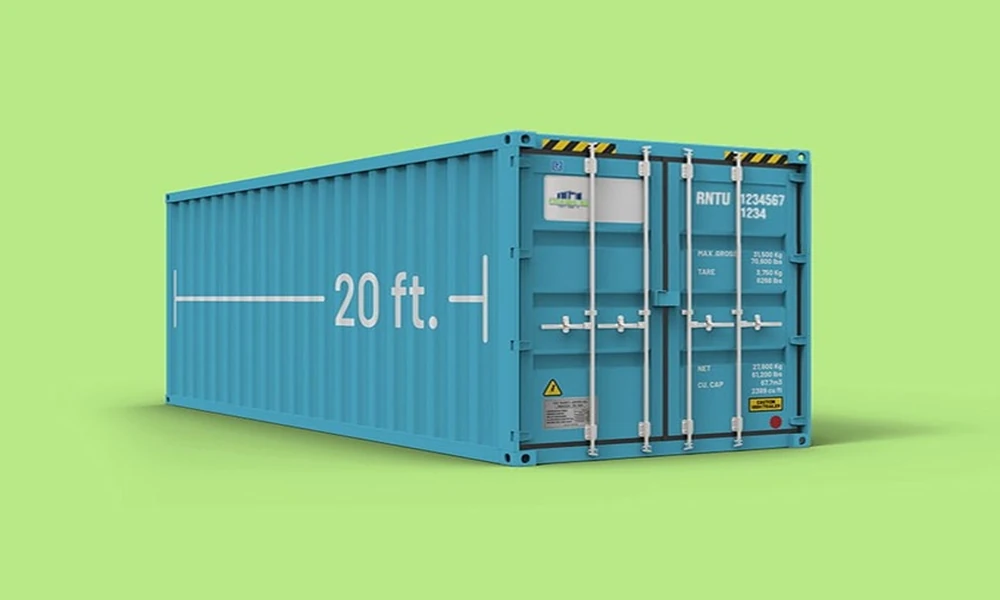
External length 6.058 m, width 2.438 m, height 2.591 m. Internal volume sits around 33 cubic metres, and with a tare near 2,200 kg against a 30,480 kg maximum gross, payload runs close to 28 tonnes. That combination makes it the format for heavy goods stone, tiles, machinery, canned products, liquids in drums. It also fits delivery sites where a longer vehicle simply cannot turn or reverse. Eleven standard pallets occupy the floor in a single layer with room to secure them.
The 40-Foot: Volume Under the Same Ceiling
Twice the length at 12.192 m, roughly 67 cubic metres, around twenty-four pallets on the floor. Tare rises to about 3,800 kg but maximum gross does not change on most units, so payload drops to roughly 26 tonnes. Per cubic metre it is substantially cheaper to ship than two shorter units, and per consignment it consumes one handling slot rather than two. For cargo of ordinary density this is the default, and departing from it needs a reason.
The 40-Foot High Cube: Light and Bulky
Same footprint, 2.896 m external height rather than 2.591 m, giving roughly 76 cubic metres. The extra 300 mm of internal height translates into another tier of cartons on most stacking patterns, which is why furniture, textiles, packaging materials and consumer goods move in this format almost by default. The rate premium over standard height is usually small. The real constraint sits at the delivery end, since overall travel height on a chassis increases and low bridges, car park entrances and covered bays all need checking first.
The Formats You See Less Often
Ten-foot units exist and suit compact storage or small-quantity moves, though availability is patchy and the price per cubic metre is poor. Forty-five-foot high cubes offer around 86 cubic metres and appear mainly on intra-regional lanes where road regulations permit the length, but they are not universally accepted at every terminal or on every service. Neither should be assumed available without confirming with the supplier before the plan depends on it.
The Weight and Volume Test
Total the weight and total the volume of the intended load, then divide one by the other. Above roughly 850 kg per cubic metre, weight limits you and the 20-foot is the efficient choice. Below that, volume limits you and the longer formats win. Run the calculation against an actual packing list rather than an estimate, because the answer frequently contradicts intuition dense goods look small so people over-order length, while light goods look large so people over-order weight capacity they never come close to using.
Pallet Patterns and the Space You Lose
Published internal volume is a theoretical figure nobody achieves. Real utilisation depends on how your pallets tessellate, and the gap between the two is where budgets quietly leak. The internal width takes two standard pallets side by side with a few centimetres to spare, which is comfortable, but a pallet footprint even slightly outside standard turns that into a single file arrangement and halves floor efficiency at a stroke. Height is the other loss: cargo that stacks to two thirds of the internal height leaves a third of what you paid for filled with air. Before ordering, lay the pattern out on paper with the actual pallet dimensions and actual carton heights, because the same intermodal container will carry markedly different quantities depending on how the load is arranged inside it. It regularly changes the answer.
Sizing for Storage Rather Than Shipping
Static storage changes the arithmetic entirely. Weight limits stop mattering and access frequency starts to. A shorter unit means everything stays within reach of the doors, while a longer one turns the back third into archive space unless you fit shelving and keep a walkway clear. Two 20-foot units often beat one 40-foot for daily-use storage despite costing more, simply because both ends remain reachable. A shipping-certified unit is also more certification than a storage user needs, so buying to condition grade rather than to sea-freight approval can cut the price meaningfully.
Ground, Access and Delivery
A loaded delivery vehicle needs a straight approach, firm ground and room to tilt or crane. A 40-foot tilt-bed wants upwards of 30 m of clear run to discharge; a crane lift wants headroom and outrigger space. On soft ground, set the unit on railway sleepers or concrete pads under the corner castings rather than letting it sit flat, which levels it and keeps the underside ventilated. Doors that will not close are almost always a symptom of a box sitting on uneven ground rather than a fault with the box.
Making the Decision
Measure the cargo, calculate the density, check the delivery access, then choose. Where the answer is genuinely borderline, the longer format usually wins on cost per unit shipped and the shorter one wins on flexibility. For storage, prioritise reachability over raw capacity every time. A GP container chosen against real numbers rather than a rough guess repays those ten minutes many times over across a year of shipments.
