
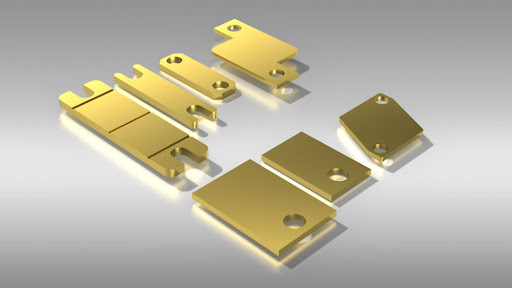
The tungsten heat sink represents a solution to a problem that, until recently, most people never knew existed: the inexorable accumulation of waste heat in devices we have come to regard as essential to modern life. Every smartphone, every laptop, every data centre humming quietly in the background of our digital existence generates heat as an unavoidable consequence of electrical resistance and energy conversion. This heat, if left unmanaged, becomes destructive. Circuits fail. Processors throttle back their performance. Components age prematurely, their lifespans measured in months rather than years. The challenge has grown more acute as we have engineered electronics to operate at higher power densities, cramming more computational capability into spaces that seem to shrink with each product generation.
The Thermal Crisis Nobody Discusses
We seldom think about heat when we tap a screen or stream a video. Yet beneath the glass and silicon, a constant battle unfolds against the laws of thermodynamics. Modern processors dissipate heat at densities approaching those found in nuclear reactors. Graphics cards in gaming computers can consume 400 watts, all of which ultimately converts to thermal energy. Power amplifiers in telecommunications equipment operate at temperatures that would be uncomfortable to touch, and must do so reliably for years without maintenance.
The tungsten heat sink addresses these challenges through properties that derive from tungsten’s position on the periodic table. As element 74, tungsten possesses 74 protons in its nucleus, creating an atomic mass that translates into exceptional density. At 19.3 grammes per cubic centimetre, tungsten packs more mass into a given volume than almost any other metal available for engineering applications.
Why Density Matters
Density determines thermal mass, and thermal mass governs how quickly a material’s temperature rises when it absorbs heat. A tungsten heat sink functions like a massive reservoir, capable of absorbing thermal energy without experiencing rapid temperature increases. This characteristic proves critical in applications where heat generation occurs in pulses or surges rather than as a steady flow.
Consider a radar system that emits powerful electromagnetic pulses. During each pulse, the power amplifiers generate intense heat over milliseconds. Between pulses, cooling mechanisms work to dissipate this accumulated energy. The tungsten heat sink smooths out these thermal spikes, preventing the temperature extremes that would otherwise stress the electronic components.
Singapore’s tungsten heat sink industry serves clients in telecommunications, aerospace, and medical technology, sectors where thermal management directly impacts system reliability and safety. The material’s performance advantages become particularly evident in these demanding applications:
- High power density electronics requiring stable operating temperatures
- Pulsed power systems experiencing rapid thermal cycling
- Space-constrained designs where conventional heat sinks prove inadequate
- High-temperature environments exceeding the capabilities of aluminium or copper
- Applications demanding minimal thermal expansion to maintain precise alignments
The Trade-Offs We Accept
Nothing comes without cost, and tungsten proves no exception. The same density that provides excellent thermal mass also creates weight penalties. A tungsten heat sink might weigh five times more than an equivalent aluminium design. In aerospace applications, where every kilogramme costs fuel and reduces payload capacity, this weight matters profoundly.
The material presents manufacturing challenges as well. Tungsten’s hardness, whilst beneficial for durability, makes it difficult to machine. Cutting tools wear rapidly. Processing speeds must be reduced. These difficulties translate into higher manufacturing costs. A tungsten heat sink typically costs ten to twenty times more than copper or aluminium alternatives.
Yet engineers continue specifying tungsten for applications where its unique properties justify these drawbacks. The calculation involves assessing whether the performance benefits outweigh the penalties in weight, cost, and manufacturing complexity.
The Material Science Behind Performance
Tungsten’s thermal conductivity of 173 watts per metre-kelvin falls below copper’s 400 or aluminium’s 237, which seems paradoxical for a material marketed as a superior heat sink. The explanation lies in understanding that thermal management involves more than conductivity alone. The ability to absorb heat without rapid temperature rise, to maintain structural integrity at elevated temperatures, and to survive thermal cycling without degradation all contribute to overall performance.
A tungsten heat sink excels in high-temperature stability. Whilst copper begins to soften around 400 degrees Celsius and aluminium melts at 660 degrees, tungsten maintains its mechanical properties beyond 1,000 degrees. This capability enables operation in environments that would destroy conventional materials.
Emerging Applications and Adaptations
The evolution of electronics continues driving demand for advanced thermal solutions. Electric vehicle power inverters must manage kilowatts in compact enclosures. Laser diodes in telecommunications equipment concentrate enormous power in semiconductor junctions measuring fractions of a millimetre. Medical imaging equipment generates heat that must be dissipated without affecting patient comfort or safety.
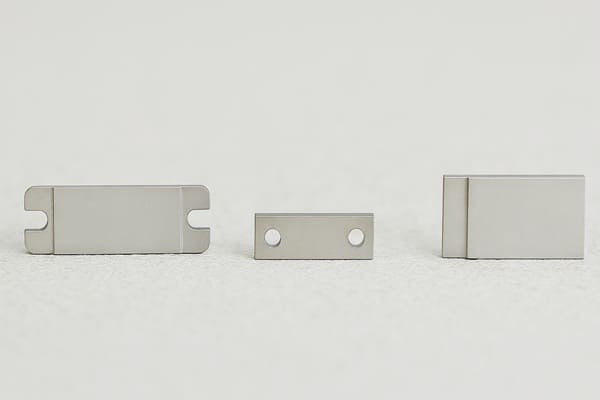
Singapore’s tungsten heat sink manufacturers have responded by developing composite solutions that combine tungsten’s thermal mass with copper’s superior conductivity. These hybrid designs position tungsten cores directly against heat sources, then employ copper fins to spread and dissipate the thermal energy. The approach optimises each material’s strengths whilst mitigating their weaknesses.
The Broader Pattern
The proliferation of tungsten heat sink technology reflects a larger pattern in our relationship with electronics. We demand ever-greater performance from devices that occupy ever-smaller spaces. We expect reliability under conditions that would have seemed impossible decades ago. We build systems whose operation depends on materials engineered to tolerate extremes of temperature, power density, and thermal cycling.
These demands have consequences. The tungsten required for heat sinks must be mined, processed, and manufactured using energy-intensive processes. The devices these heat sinks cool consume electricity that must be generated somewhere. The entire system exists within constraints imposed by physics, economics, and the finite nature of material resources.
Yet we continue down this path because the alternatives seem unacceptable. We will not willingly surrender the capabilities that modern electronics provide. Instead, we engineer solutions like the tungsten heat sink, materials and designs that push against physical limits whilst acknowledging the trade-offs inherent in every choice we make.