
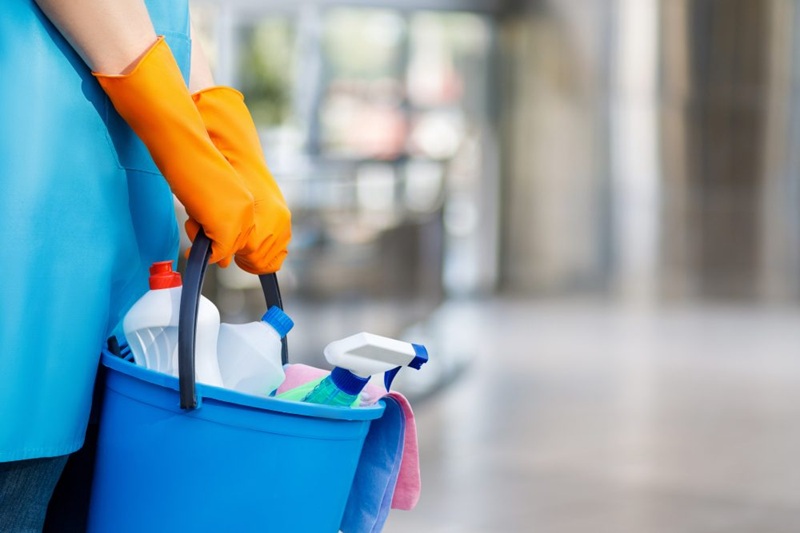
Cleaning services have become so thoroughly integrated into modern urban life that we scarcely register their existence, much like the microbiomes that colonise our bodies or the fungi that decompose forest floors. Yet this industry, employing millions globally and responsible for maintaining the built environments where we spend most of our waking hours, operates according to principles that would fascinate any ecologist. It is, in essence, a vast human effort to arrest natural processes, to hold entropy at bay, to maintain artificial environments in states that nature would never permit if left to its own devices.
The Anthropocene of Indoor Spaces
Humans have always modified their environments, but the scale and nature of modern building cleaning represents something unprecedented in our species’ history. We have created structures that nature cannot effectively clean, filled them with materials that natural decomposition cannot process, and then deployed industrial systems to manage the resulting maintenance challenge. A modern office building, with its sealed windows, artificial lighting, and climate control, exists in fundamental opposition to natural ventilation, solar disinfection, and the winnowing effects of weather.
The accumulation of contaminants in these spaces proceeds with biochemical inevitability. Each human occupant sheds roughly 30,000 to 40,000 skin cells per hour, creating a constant rain of organic matter that settles on every horizontal surface. Volatile organic compounds off-gas from furniture, carpets, and electronic equipment. Outdoor pollutants infiltrate through ventilation systems and on occupants’ shoes and clothing. Without intervention, indoor environments would quickly become inhospitable, accumulating dust, debris, and microbial growth with the inexorable logic of ecological succession.
The Chemistry of Cleanliness
Professional cleaning services deploy an arsenal of chemicals whose environmental implications deserve more scrutiny than they typically receive. Consider the phosphates once common in detergents, which proved remarkably effective at removing soils but equally effective at triggering algal blooms when they reached waterways. Or the antimicrobial agents whose overuse may contribute to antibiotic resistance, that looming crisis that microbiologists increasingly describe in apocalyptic terms.
Singapore’s National Environment Agency regulates certain aspects of cleaning chemicals used in commercial settings, particularly those that might impact indoor air quality or contribute to environmental pollution. The regulations acknowledge, if implicitly, that cleaning is never simply cleaning. It is always a matter of trade-offs: removing one form of contamination whilst potentially introducing others, solving immediate problems whilst creating longer-term consequences.
The spectrum of cleaning approaches includes:
- Conventional chemical cleaningusing petroleum-derived surfactants and solvents that work efficiently but carry environmental costs
- Green cleaning programmesemploying plant-based or biodegradable products that reduce ecological impact but may require modified techniques
- Microfibre technologythat reduces chemical dependency through mechanical action but generates its own concerns about microplastic pollution
- Enzymatic cleanersthat use biological catalysts to break down organic matter, mimicking natural processes
- Electrostatic disinfectionand UV-C systems that offer chemical-free alternatives whilst consuming significant energy
None of these options is without consequence. The question is never whether cleaning has environmental impact, but rather which impacts we choose to accept.
The Labour Ecology
Like many service industries, cleaning exists within an economic ecosystem characterised by what biologists might recognise as resource extraction. Workers at the bottom of the hierarchy expend physical labour, often at unsustainable rates, whilst value flows upward through contractors and property owners. The system functions, after a fashion, but at costs that are externalised onto workers’ bodies and futures.
Research into occupational health among cleaning workers documents elevated rates of respiratory problems, musculoskeletal injuries, and skin conditions. These are not incidental side effects but predictable outcomes of the way cleaning services are typically structured and priced. The chemical exposures, repetitive motions, and time pressures that characterise the work take measurable tolls.
Singapore’s Workplace Safety and Health Act establishes requirements for employer responsibility in protecting worker health and safety, including provision of appropriate equipment and training. Compliance varies, as enforcement across a fragmented industry of thousands of small contractors presents challenges that regulators acknowledge but have not solved.
The Efficiency Paradox
Modern cleaning services have achieved remarkable efficiency gains through standardisation, optimisation, and technological advancement. Where a cleaner once might have serviced 5,000 square feet of office space in a shift, productivity improvements now push that to 10,000 or 15,000 square feet. This is presented as progress, as evidence of industry evolution and improved methods.
Yet efficiency gains achieved through intensified labour and reduced time per task inevitably affect quality. A floor mopped in thirty seconds is not as thoroughly clean as one mopped in two minutes. Corners cut in the name of productivity accumulate into visible decline over time. The building looks maintained but degrades faster than it would under more thorough care. We have optimised for the appearance of cleanliness rather than its substance.
Conclusion
The cleaning industry offers a microcosm of larger questions about sustainability, labour, and the maintenance costs of modern civilisation. We have built environments that require constant intervention to remain habitable, then structured that intervention in ways that externalise costs onto workers and ecosystems. The solutions, if they exist, require rethinking not just how we deliver cleaning services but why our built environments need such intensive maintenance in the first place, and whether the current arrangements serve anyone’s interests beyond the short-term bottom line of property owners seeking to minimise operating expenses whilst maximising rents. Perhaps the most honest assessment is that we have not yet learned to clean sustainably, and that cheap, convenient cleaning services represent a bargain whose full costs remain to be calculated.
