
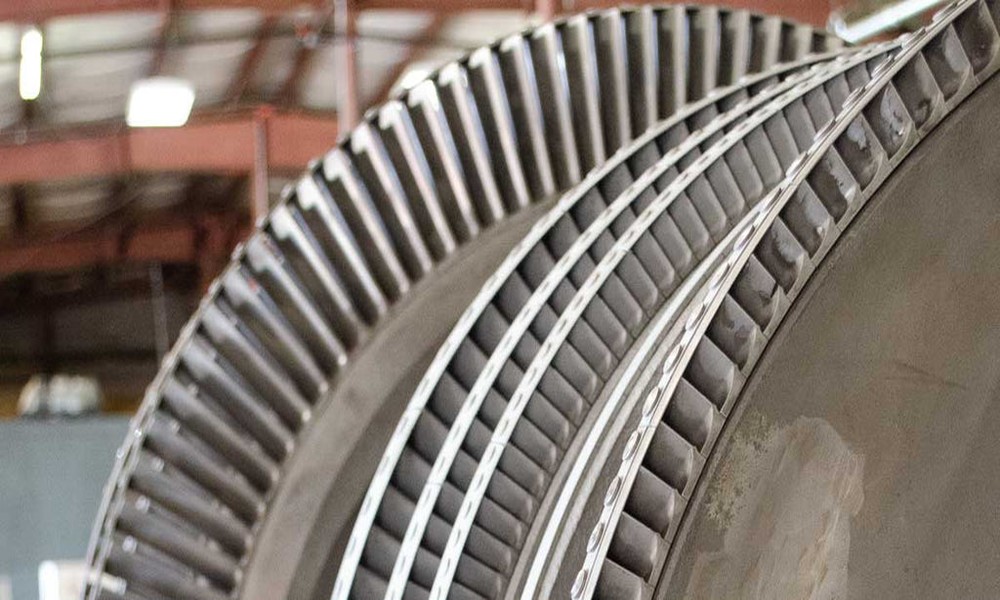
Operators are faced with a common conundrum when vital turbine parts exhibit wear or failure. It’s either you fix what they already have or change it completely.
The choice is rarely straightforward. It frequently has significant effects on long-term dependability, performance, cost, and downtime.
Plant managers and Turbine Component Repair service teams can safeguard assets while optimizing return on investment. This is achieved by being aware of the elements that affect decisions – whether to repair or replace turbine components.
Life Extension’s Place in GT Strategy
The goal of such programs is to preserve and fix essential parts. So that machinery can continue to function dependably after its initial design life. Operators wishing to optimize the value of current assets will find this strategy particularly beneficial.
Skilled service providers can prolong component life. While upholding performance and safety standards. This is done through dimensional restoration, heat or coating treatments, and precision welding.
Life extension techniques can drastically lower lifecycle costs. Of course, without compromising dependability when used properly.
Assessing the Viability of Repairs
Many parts can be repaired, but not all of them are. A comprehensive inspection procedure usually consists of:
- Dimensional and visual examinations
- Non-destructive testing techniques, including fluorescence penetrant examination and ultrasonic
- When necessary, metallurgical analysis
These assessments aid in determining the degree of damage. That’s if the component can be repaired to a satisfactory level of service.
With less disturbance to operations and quicker turnaround times. Preservations are frequently far less expensive than replacements.
Performance and Dependability Factors
Repair technologies have come a long way. Aerodynamic layouts and structural integrity can all be restored to OEM-level specifications. Read from https://www.cmcpems.com/wp-content/uploads/2021/07/cogeneration-texas.pdf, for an example.
Upgraded materials and coatings may occasionally even outperform the original design. Especially in terms of performance and longevity.
Because of this, choosing whether to replace or restore components is more about strategy than compromise. Repairing can be a proactive instead of a reactive approach with the correct knowledge.
Recognizing the Actual Replacement Cost
Replacement is frequently seen as the simpler or safer course of action. Particularly when dealing with severely worn parts. Factory specs, warranties, and dependable performance. These are all appealing features of the new parts.
Replacement, however, also entails lengthier lead times, greater upfront costs, and possible supply chain delays. A total replacement might not be required in many situations.
With sophisticated repairing techniques, parts may frequently be returned to like-new condition. This includes blades, rotors, vanes, and combustors. A more thorough examination is necessary at this point.
The Significance of LCC Analysis
Repair versus replacement decisions are heavily influenced by lifecycle cost analysis. This approach assesses a component’s lifetime ownership costs rather than just its original rate.
LCC analysis takes into account elements like:
- The initial cost of replacement or restoration
- Anticipated service life upon completion of work
- Production loss and downtime
- The frequency of maintenance and related labor
- The possibility of future failure
Operators can make well-informed decisions that support long-term business objectives. Rather than immediate convenience, they consider the whole financial picture.
Effects of Lead Time and Downtime
Manufacturing delay times are frequently associated with replacement parts. Particularly for large or specialist components. Prolonged outages can be expensive and inconvenient – find out more about the 2021 power shutdown.
Servicing usually has a quicker turnaround. Especially when they are provided by seasoned companies with internal resources.
In addition to increasing productivity. Reducing downtime also lessens the impact on operations and revenue.
Making the Wise Decision
Replacement versus repair should never be decided by habit or presumption. Data, inspection findings, and a firm grasp of long-term goals should be its driving forces.
Combining life extension methods with comprehensive LCC analysis and evaluations. This gives operators the insight they need to make confident, economical decisions.
Improve the Quality of Repairs
- Participate Early in the Procedure
- Create a thorough specification that makes use of industry best practices. Also, the lessons discovered from prior maintenance.
- To guarantee precise execution, establish review points at crucial moments in the reparation process.
- Talk about deviations or non-conformances proactively to quickly resolve problems.
- If at all feasible, go to the expert shop. Conduct a direct audit of the procedure to make sure it complies with the requirements.
- Incorporate Extensive Quality Assurance
To get satisfactory outcomes, inspection is essential. At crucial phases of the process, include the following quality checks:
- Non-Destructive Testing: Confirms that there are no undetected flaws.
- Destructive Testing: Verifies procedures such as coating removal and reconsideration without compromising important parts.
- Flow as well as Pressure Checks: Ensures that fuel and air systems are not impacted.
- Coating Thickness Checks & Cooling Hole Blockage Evaluation: Verifies correct coating application and cooling system operation.
These inspections help confirm that the renovation satisfies strict quality standards.
- Examine the documentation following upkeeps and do visual inspections.
- Examine the work scope to make sure the tasks were finished according to the instructions.
- Perform dimensional inspections to confirm that important metrics adhere to allowable tolerances.
- To find possible inconsistencies in measurement data, look for outliers.
- To make sure no problems were missed, do a last visual assessment.
By taking the time to complete these extra steps, you can be confident that the equipment is prepared for dependable performance.
