
Chapter 1 — A Small Plan That Felt Enough
It was not a big outing.
That was the point.
Unity and her friend had only planned on dessert and tea, maybe a couple of hours away from the rest of the day. No dinner afterward. No reason to make it into something larger than it was. Just an afternoon with a table, a window, and enough time to sit still for a while.
Unity liked plans like that. They do not ask for much. They do not force the clothes to do too much either. She got dressed in the same spirit. A top she already trusted. Something easy below. Shoes she would not regret after an hour. Nothing dramatic, nothing overthought.
Her friend had sent a message earlier about pastries, which was enough to set the afternoon in motion. Unity read it, thought about it for a second, and started getting ready.
That was all.
Chapter 2 — What She Reached for First
She did not spend long in front of the mirror.
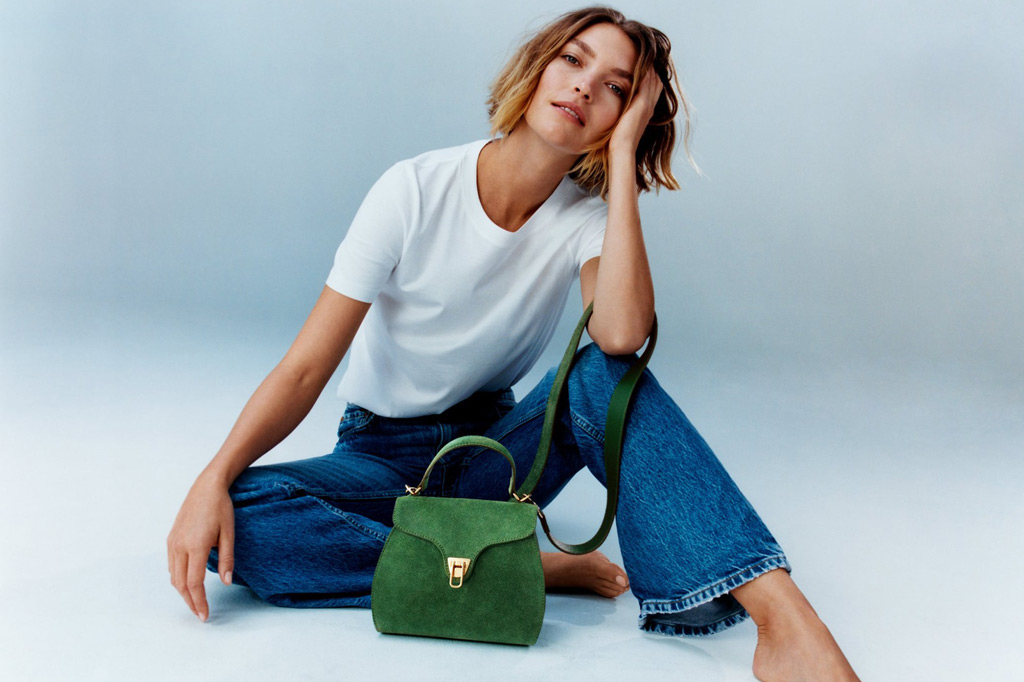
The coccinelle bag was already within reach, and that made the decision easier. It worked with the outfit instead of interrupting it. That was what she liked most. Not a strong statement. Not something that changed the whole direction of the look. Just a bag that could sit beside the clothes and not feel out of place.
Unity does not usually dress from the accessory outward. She starts with the day—what kind of place she is going to, how long she will stay, whether she wants to think about her outfit once she leaves the house. Most of the time, the answer is no.
So the outfit stayed simple. The bag stayed with it. That seemed like enough. Casual dressing rarely needs more than that when it is done well.
Chapter 3 — Her Style Is Built for Real Days
Unity dresses like someone who expects to sit down, stand up, lean over a table, laugh halfway through a sentence, and keep going.
That sounds ordinary, but ordinary is hard to get right. A lot of clothes only behave when the body is still. Unity’s clothes seem chosen with actual use in mind. She wants things that hold up after the first hour, not just in the mirror before she leaves.
Her friend had picked a look with a little more contrast. Nothing extreme—just enough variation to make the table look more interesting once they were together. Unity kept her own outfit steadier. The difference between them was small, but it changed the mood of the afternoon in a nice way.
She does not chase a “finished” look in any dramatic sense. She wants something that feels settled and still leaves room for the day to happen.
Chapter 4 — By the Time They Reached the Dessert Shop
The dessert shop was already warm with people when they arrived.
Not crowded in the stressful sense—just full enough to feel alive. Cups moved across tables. Someone at the counter was talking too softly to hear. There was that smell cafes get when sugar, tea, and butter are all in the room at once. Hard to describe. Easy to enjoy.
Unity and her friend took a table near the window. The light there was better than expected. Not bright in a showy way—just gentle enough to make everything look a little softer around the edges.
The coccinelle bag rested beside Unity’s chair first, then she picked it up and set it where it would stay out of the way but still close enough to touch.
It worked there too. That was the nice part. Some things are fine while walking and awkward once you sit. This one did not change its feel.
Her friend was already reading the dessert list like it mattered. Unity was looking at the tea options, then looking again. No rush. No hurry to decide. The afternoon was not demanding anything.
Chapter 5 — What Stays Good Once You Sit Down
A lot of outfits fall apart at the table.
Not literally—just in practice. You sit, and the shape changes. You lean, and something pulls. You reach across for a spoon, and suddenly the whole thing feels wrong in a way you did not notice before. Unity’s outfit did not have that problem.
It stayed easy. Nothing pinched. Nothing got in the way of the chair. The clothes were doing their job without trying to impress anyone. That is often the difference between an outfit that looks good and one that actually works.
Her friend started asking which cake had the better filling, whether the tea would be floral or too strong, whether they should split something or order their own. Unity listened, smiled, and answered when it felt worth answering.
The table started to feel like theirs after a few minutes. It had that slow, comfortable feeling that only shows up when nobody is trying to make the afternoon move faster than it wants to.
Chapter 6 — Tea Arrives and the Day Slows Further
When the tea came, the whole table changed a little.
Steam rose for a second, then disappeared. The saucers landed with that small sound cafes always seem to make. Plates shifted. A spoon moved once against porcelain. Nothing big happened, but the pace changed anyway. The room felt slower after that.
The coccinelle bag stayed beside Unity and looked almost like it had always been part of the table. That is a useful thing for an accessory. It does not have to call attention to itself. It just has to belong.
She took a sip and let the tea sit there for a second before speaking again. Her friend was in the middle of a story now, the kind that sounds better when there is cake in front of it. Unity smiled at the right points. She did not rush the conversation. There was no need.
If she wanted to look through the category later, she already knew where she would end up: find more here.
That feels right because it does not sound like a pitch. It sounds like something you would open while still half inside the afternoon.
Chapter 7 — What She Leaves Out
Unity’s style works partly because she knows when to stop.
She does not keep adding things once the outfit already feels right. No extra layer just because she might get cold. No second accessory because she thinks the first one needs help. If it works, she leaves it alone. That restraint gives her clothes a kind of honesty that is easy to trust.
Her friend once said Unity always looks like she got ready quickly. Maybe. But that misses the point a little. She is not careless. She is selective. She already knows what feels right, so she does not spend the morning trying to prove it again.
That leaves more space for the actual afternoon—the tea, the cake, the conversation that keeps drifting from one thing to another, the little pauses in between. The outfit is just there, doing what it should.
Chapter 8 — The Sweetest Part of the Afternoon
By the time the second plate arrived, the table had lost its neatness in the best possible way.
A napkin had moved. The cups had shifted. One spoon was lying at a slight angle against the saucer. Someone had leaned back and stayed there. It felt used now, which is another way of saying it felt good.
The coccinelle bag sat beside Unity while she laughed at something her friend said, and it fit the room without asking for attention. That is often the best version of an accessory on a day like this—not the loud one, but the one that makes sense once the afternoon has already started to become a memory.
Her friend looked at the cake again, then at Unity, then back at the cake, as if deciding whether a second bite was a good idea. Unity did not rush her. That matched the whole afternoon. Nothing was being forced. Nothing needed a performance.
Dessert shop light, tea that had gone warm enough to drink, one friend across the table, and a look that stayed in place—more than enough.
Chapter 9 — Why the Look Works So Well in a Cafe
Some outfits look good in photos. Some only look good while standing still. Others work because they survive the real parts of the day.
Unity’s belongs to that last group.
It works when she is sitting, talking, reaching across the table, or laughing with her shoulders instead of her face. That matters more than people admit. A cafe puts clothes through a small test. Not a harsh one—just enough to show whether they can hold up when the body is no longer posed.
Unity seems to know that without making a speech about it. She dresses for the day that is in front of her, not the one she imagined three days ago. That is probably why her style feels believable.
Her friend said they should come back next week, maybe try a different pastry, maybe take the same window seat if it was free. Unity said yes in that half-formal, half-real way people say yes when they already know they mean it.
Chapter 10 — Leaving Without Breaking the Mood
When they stood up to leave, the outfit still made sense.
That is the part that tells you whether it worked. Sitting can hide a lot. Standing does not. The chair leaves your body, the bag comes back into your hand, and suddenly everything that was fine has to prove itself again. Unity did not seem to need any repairs.
The coccinelle bag looked as natural on the way out as it had when they first sat down. It had stayed with the afternoon instead of fighting it. That is a better test than any mirror check.
Her friend headed for the door first, still talking about desserts for next time. Unity followed with the same easy pace she had brought in with her. The change from table to street was smooth enough that it barely felt like a transition.
That is usually a sign that the outfit belonged to the afternoon, not just to arrival.
Chapter 11 — The Part That Lingers Later
What stays in memory after an afternoon like this is rarely one single thing.
It is the tea cooling at the edge of the cup. The fork on the plate. The sound of someone laughing across from you. The way the window light changed while they were talking. Unity’s outfit belongs to that kind of memory. It does not stand apart from the scene. It sits inside it.
That is why it lasts. Not because it was dramatic. Not because it was trying to be noticed. Just because it felt right while the afternoon was happening.
Her friend later said the whole thing felt easy in the best way. That sounds vague until you realize it says almost everything it needs to say.
Chapter 12 — A Soft Ending to a Sweet Day
By the time Unity got home, the afternoon had already softened in memory.
The dessert shop, the tea, the conversation, the window light, the way the outfit held together from the first step out the door to the last step back in. Everything stayed in the same easy register. Nothing needed rescuing. Nothing made the day harder than it had to be.
The coccinelle bag had done what good casual pieces do. It stayed useful. It stayed comfortable. It never made the day feel more dressed up than it needed to be. It was part of why the look worked, but not in a way that asked to be stared at.
Unity’s style is strongest when it seems almost unplanned. Not careless—just unforced. That is why an afternoon like this suits her so well. A little dessert, a little tea, a friend across the table, and one outfit that lets the whole thing happen without getting in the way.
